-
Unlocking Value: Generative AI Platform for Private Equity
In the fast-paced world of private equity, where decisions can make or break fortunes, leveraging cutting-edge technology becomes imperative. One such technological advancement reshaping the landscape of private equity is Generative Artificial Intelligence (AI). Generative AI platforms are revolutionizing the industry by offering powerful tools for data analysis, predictive modeling, and decision-making. In this article, we delve into the transformative potential of generative AI platforms within the realm of private equity, exploring their capabilities, benefits, challenges, and future prospects.
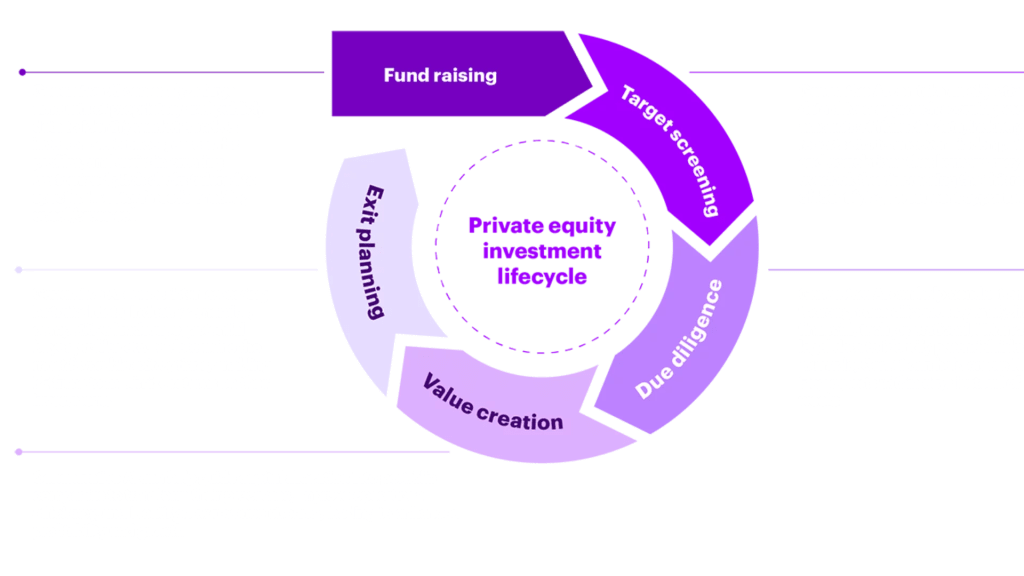
Understanding Generative AI in Private Equity
Generative AI refers to a subset of artificial intelligence techniques that involve training models to generate new data or content that is similar to the input data. Generative AI platform for private equity employs advanced algorithms such as Generative Adversarial Networks (GANs), Variational Autoencoders (VAEs), and Transformer models to create, analyze, and manipulate data.
In the context of private equity, generative AI platforms can perform a multitude of tasks, including:
- Data Synthesis: Generating synthetic data sets that mimic real-world scenarios, facilitating analysis without compromising sensitive information.
- Scenario Modeling: Creating various hypothetical scenarios to assess the potential outcomes of investment decisions.
- Risk Assessment: Identifying and quantifying risks associated with investment opportunities by analyzing vast amounts of data.
- Portfolio Optimization: Optimizing investment portfolios by analyzing historical data, market trends, and risk factors.
- Due Diligence Automation: Automating the due diligence process by analyzing financial statements, market reports, and other relevant documents.
- Predictive Analytics: Forecasting future trends and market movements to make informed investment decisions.
Benefits of Generative AI Platform for Private Equity
The integration of generative AI platform for private equity offers several advantages to private equity firms, enabling them to enhance efficiency, minimize risks, and unlock new opportunities. Some key benefits include:
Enhanced Decision-Making
Generative AI platform for private equity empowers private equity professionals with advanced analytical capabilities, enabling them to make data-driven decisions with greater confidence. By synthesizing vast amounts of data and generating actionable insights, these platforms help investors identify lucrative opportunities and mitigate potential risks.
Improved Due Diligence
Conducting due diligence is a crucial aspect of the private equity investment process, requiring meticulous analysis of financial data, market dynamics, and competitive landscapes. Generative AI platforms streamline this process by automating data extraction, analysis, and validation, allowing firms to perform comprehensive due diligence in a fraction of the time required using traditional methods.
Portfolio Optimization
Optimizing investment portfolios is essential for maximizing returns and minimizing risks. Generative AI platforms leverage sophisticated algorithms to analyze historical data, market trends, and risk factors, enabling private equity firms to optimize their portfolios for maximum profitability while ensuring diversification and risk mitigation.
Enhanced Risk Management
Private equity investments inherently involve certain risks, ranging from market volatility to regulatory changes. Generative AI platforms play a crucial role in risk management by identifying, quantifying, and mitigating various risk factors associated with investment opportunities. By analyzing vast amounts of data and simulating different scenarios, these platforms help investors make informed decisions while minimizing potential losses.
Scalability and Efficiency
Generative AI platforms offer scalability and efficiency advantages, allowing private equity firms to analyze large datasets and perform complex calculations in a fraction of the time required by manual methods. This scalability enables firms to handle multiple projects simultaneously, thereby enhancing productivity and competitiveness in the market.
Challenges and Considerations
While generative AI platform for private equity holds immense potential for transforming private equity operations, they also present certain challenges and considerations that need to be addressed:
Data Privacy and Security
Privacy and security concerns are paramount in the private equity industry, where sensitive financial information and proprietary data are involved. Generative AI platforms must adhere to strict data privacy regulations and implement robust security measures to protect confidential information from unauthorized access or breaches.
Data Quality and Bias
The quality of input data significantly impacts the performance and reliability of generative AI models. Private equity firms must ensure the accuracy, completeness, and relevance of the data used to train these platforms to avoid bias and inaccuracies in the analysis and decision-making process.
Interpretability and Transparency
Interpreting the output of generative AI models and understanding the underlying logic behind their predictions can be challenging. Private equity professionals need tools and techniques to interpret model outputs, validate results, and ensure transparency in decision-making processes.
Integration with Existing Systems
Integrating generative AI platform for private equity with existing IT infrastructure and workflow systems can pose technical challenges. Private equity firms must assess compatibility, scalability, and integration requirements before implementing these platforms to ensure seamless operation and maximum efficiency.
Future Outlook
The future of generative AI in private equity looks promising, with continued advancements in technology, algorithms, and applications. As AI capabilities evolve, generative platforms are expected to become more sophisticated, enabling private equity firms to extract deeper insights, optimize investment strategies, and mitigate risks more effectively.
Advancements in AI Algorithms
Ongoing research and development in AI algorithms are driving continuous improvements in generative models, enhancing their performance, scalability, and versatility. Innovations such as self-learning algorithms, meta-learning techniques, and reinforcement learning are expected to further enhance the capabilities of generative AI platforms in the future.
Adoption of Explainable AI
The growing emphasis on transparency and accountability is leading to increased adoption of explainable AI techniques in private equity. Explainable AI enables stakeholders to understand how AI models arrive at their decisions, facilitating trust, validation, and compliance with regulatory requirements.
Integration with Emerging Technologies
Generative AI platforms are likely to integrate with other emerging technologies such as blockchain, Internet of Things (IoT), and augmented reality (AR) to create synergies and unlock new opportunities in private equity. These technologies can enhance data security, enable real-time monitoring, and facilitate decentralized investment ecosystems.
Expansion of Use Cases
As generative AI platforms mature, they are expected to find applications beyond traditional investment analysis and decision-making. From deal sourcing and fundraising to post-investment management and value creation, these platforms will play an increasingly integral role across the entire private equity value chain.
Conclusion
Generative AI platforms are poised to revolutionize the private equity industry by offering powerful tools for data analysis, predictive modeling, and decision-making. By leveraging advanced algorithms and vast datasets, these platforms enable investors to enhance efficiency, minimize risks, and unlock new opportunities in a rapidly evolving market landscape. While challenges such as data privacy, bias, and interpretability remain, ongoing advancements in technology and methodologies are expected to address these concerns and pave the way for broader adoption and integration of generative AI in private equity operations. As firms embrace AI-driven solutions, they stand to gain a competitive edge in an increasingly complex and dynamic investment environment, driving value creation and sustainable growth in the years to come.
With this comprehensive exploration of generative AI platforms in private equity, readers gain insight into the transformative potential and practical applications of this innovative technology. Through structured headings, clear explanations, and forward-looking analysis, the article provides a holistic understanding of how generative AI is reshaping the landscape of private equity investment.
-
The Need for Gen AI Platforms in Finance: Revolutionizing the Financial Landscape
Introduction
In recent years, the financial industry has witnessed unprecedented advancements in technology, leading to the emergence of innovative solutions aimed at enhancing efficiency, accuracy, and decision-making processes. One such revolutionary development is the advent of Generative Artificial Intelligence (Gen AI) platforms. These platforms harness the power of artificial intelligence (AI) to transform various aspects of finance, ranging from risk management to customer service. In this article, we delve into the pressing need for Gen AI platforms in finance, exploring their benefits, applications, and implications for the future of the industry.
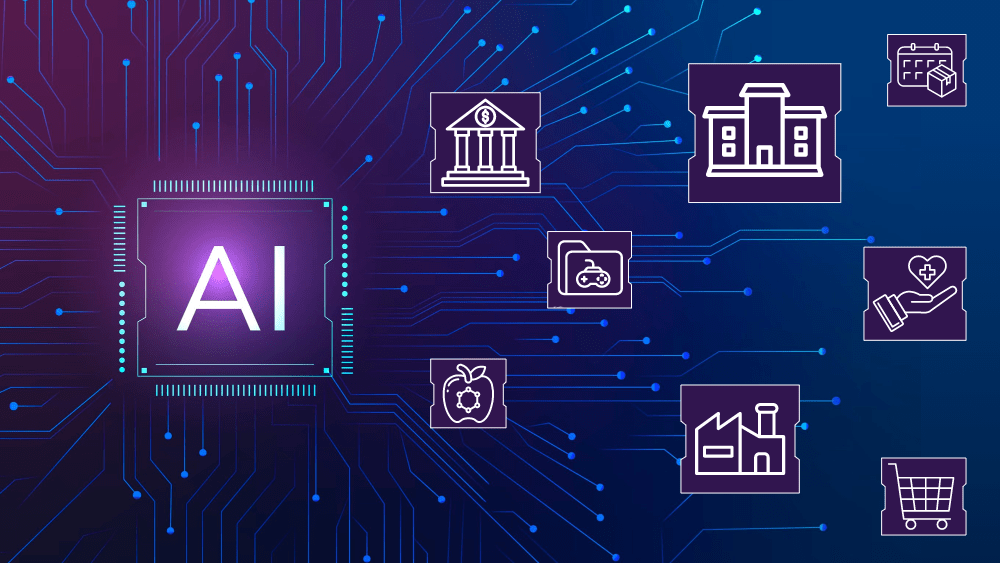
Understanding Gen AI
Before delving into the significance of Gen AI platforms in finance, it’s crucial to grasp the concept of Generative Artificial Intelligence. Gen AI refers to a subset of AI technologies that have the capability to not only analyze data but also generate new content, insights, or solutions autonomously. Unlike traditional AI systems that rely on predefined rules and patterns, Gen AI platform for finance leverages techniques such as deep learning and natural language processing to create novel outputs.
Challenges in Traditional Financial Systems
Traditional financial systems often grapple with various challenges, including manual processes, data silos, and limited predictive capabilities. These shortcomings hinder efficiency, increase operational costs, and impede decision-making. Moreover, the financial landscape is continuously evolving, marked by dynamic market conditions, regulatory changes, and technological disruptions. In such a complex environment, organizations must adopt agile and innovative solutions to stay competitive and mitigate risks effectively.
The Role of Gen AI Platform for Finance
Gen AI platform for finance offers a paradigm shift in the way financial institutions operate and interact with data. By harnessing the power of advanced algorithms and machine learning techniques, these platforms empower organizations to:
- Enhance Decision-Making: Gen AI platforms analyze vast volumes of financial data in real-time, enabling organizations to make data-driven decisions with greater accuracy and speed. Whether it’s assessing investment opportunities, managing portfolios, or detecting fraudulent activities, these platforms provide actionable insights that drive strategic outcomes.
- Automate Processes: Manual and repetitive tasks, such as data entry, reconciliation, and compliance reporting, are prime candidates for automation through Gen AI platform for finance. By automating these processes, financial institutions can streamline operations, reduce errors, and free up valuable human resources to focus on high-value activities.
- Improve Customer Experience: Personalization is key to delivering exceptional customer experiences in the financial sector. Gen AI platforms leverage predictive analytics to understand customer preferences, behavior, and needs, allowing organizations to offer tailored products and services that resonate with their audience.
- Optimize Risk Management: Managing risk is inherent to the financial industry, and Gen AI platforms play a crucial role in enhancing risk management practices. These platforms employ advanced algorithms to assess creditworthiness, detect anomalies, and predict market trends, thereby enabling proactive risk mitigation strategies.
- Drive Innovation: In a rapidly evolving landscape, innovation is imperative for sustained growth and relevance. Gen AI platforms foster innovation by enabling experimentation, exploration, and iteration. They empower financial institutions to develop novel products, services, and business models that cater to evolving market demands.
Applications of Gen AI in Finance
The applications of Gen AI in finance are diverse and far-reaching, spanning across various domains:
- Algorithmic Trading: Gen AI platforms leverage advanced algorithms to analyze market data, identify trading opportunities, and execute transactions at high speeds. These platforms enable algorithmic trading strategies that capitalize on market inefficiencies and trends, driving optimal returns for investors.
- Fraud Detection: Detecting and preventing fraudulent activities is a top priority for financial institutions. Gen AI platforms employ machine learning algorithms to analyze transactional data, identify suspicious patterns, and flag potentially fraudulent behavior in real-time, mitigating financial losses and reputational damage.
- Credit Scoring: Assessing the creditworthiness of individuals and businesses is a critical function in lending operations. Gen AI platform for finance utilizes alternative data sources, such as social media profiles and transaction histories, to enhance traditional credit scoring models. By incorporating a broader range of factors, these platforms enable more accurate risk assessment and decision-making.
- Customer Service: Gen AI platforms revolutionize customer service in the financial industry by offering personalized and proactive support. Through chatbots and virtual assistants powered by natural language processing, financial institutions can address customer inquiries, provide account information, and offer product recommendations in real-time, enhancing satisfaction and retention.
- Portfolio Management: Managing investment portfolios requires sophisticated analysis and decision-making. Gen AI platforms leverage predictive analytics to optimize portfolio allocation, mitigate risk, and maximize returns. These platforms enable investment managers to adapt to market dynamics swiftly and capitalize on emerging opportunities.
Implications for the Future
The adoption of Gen AI platforms in finance holds profound implications for the future of the industry:
- Evolving Regulatory Landscape: As Gen AI platforms become integral to financial operations, regulators will need to adapt regulations and compliance standards accordingly. Ensuring transparency, accountability, and ethical use of AI will be paramount to maintaining trust and integrity in the financial system.
- Reskilling the Workforce: The widespread adoption of Gen AI platforms will necessitate reskilling and upskilling the workforce to leverage AI technologies effectively. Financial professionals will need to acquire new skills in data analytics, machine learning, and programming to remain competitive in the digital age.
- Fostering Collaboration: Collaboration between financial institutions, technology providers, and regulatory bodies will be essential to drive innovation and address common challenges. Open platforms and ecosystems will facilitate knowledge sharing, interoperability, and co-creation of solutions that benefit the entire industry.
- Ethical Considerations: As AI technologies become more pervasive, ethical considerations surrounding data privacy, bias, and fairness will come to the forefront. Financial institutions must prioritize ethical AI practices, ensuring that AI systems uphold principles of transparency, accountability, and equity.
Conclusion
In conclusion, Gen AI platforms have emerged as a transformative force in the finance industry, offering unparalleled capabilities to drive innovation, enhance efficiency, and mitigate risks. By harnessing the power of advanced algorithms and machine learning techniques, these platforms empower financial institutions to make data-driven decisions, automate processes, and deliver personalized experiences to customers. As the adoption of Gen AI continues to accelerate, financial organizations must embrace change, adapt to new technologies, and collaborate across sectors to realize the full potential of AI in reshaping the future of finance.
-
The Future of Gen AI Solution for Manufacturing: A Glimpse into Tomorrow’s Factories
As we stand at the precipice of the Fourth Industrial Revolution, the manufacturing industry is on the cusp of a transformative evolution propelled by emerging technologies such as Generative AI. Generative AI solutions have already begun to revolutionize traditional manufacturing processes, driving innovation, efficiency, and customization. However, the future holds even greater promise, as Generative AI continues to advance, unlocking new opportunities and reshaping the manufacturing landscape in unprecedented ways. This article delves into the future of Gen AI solutions for manufacturing, exploring emerging trends, technologies, and applications that will define tomorrow’s factories.

Introduction to the Future of Generative AI in Manufacturing
The future of manufacturing is intricately intertwined with the evolution of Generative AI solutions, which are poised to play a central role in driving innovation, efficiency, and competitiveness in the global marketplace. As Generative AI continues to advance, manufacturers can expect to see transformative changes across various aspects of the production process, from design and production planning to quality control and supply chain management. By harnessing the power of advanced algorithms, machine learning techniques, and vast datasets, Gen AI solution for manufacturing will enable manufacturers to unlock new opportunities, overcome challenges, and thrive in an increasingly digital and interconnected world.
Advancements in Design Innovation
One of the key areas where the future of Generative AI in manufacturing holds immense promise is in design innovation. As Generative AI algorithms become more sophisticated and capable, manufacturers can expect to see a proliferation of novel designs and product concepts that push the boundaries of creativity and functionality.
AI-Driven Design Inspiration
Generative AI solutions will empower designers and engineers with new tools and capabilities to explore innovative design concepts and generate novel solutions. By analyzing vast datasets of historical designs, market trends, and user preferences, Generative AI algorithms will provide designers with inspiration and recommendations for creating cutting-edge products that resonate with consumers and drive market differentiation.
Generative Design for Sustainability
In the future, Gen AI solution for manufacturing will play a crucial role in designing sustainable products and optimizing manufacturing processes to minimize environmental impact. By considering factors such as material usage, energy consumption, and lifecycle analysis, Generative AI algorithms will enable manufacturers to generate designs that prioritize sustainability and minimize carbon footprint. This focus on sustainability will not only align with regulatory requirements and consumer preferences but also drive cost savings and operational efficiencies.
Co-Creative Design Collaboration
Generative AI solutions will facilitate collaborative design processes by enabling designers, engineers, and other stakeholders to co-create and iterate on designs in real-time. By leveraging cloud-based platforms and collaborative tools, teams can collaborate seamlessly across geographical boundaries, share ideas, and iterate on designs iteratively. This co-creative design collaboration will foster innovation, accelerate time-to-market, and drive competitive advantage in a rapidly changing market landscape.
Transformation of Production Processes
In addition to driving design innovation, the future of Generative AI in manufacturing will see transformative changes in production processes, as manufacturers leverage advanced algorithms and automation technologies to optimize efficiency and flexibility.
Autonomous Production Systems
Generative AI solutions will enable the development of autonomous production systems that are capable of self-optimization and adaptation in response to changing production demands. By integrating AI algorithms with robotics, IoT sensors, and real-time data analytics, manufacturers can create production systems that can autonomously adjust production schedules, optimize workflows, and respond to disruptions in real-time. This autonomy will enable manufacturers to achieve unprecedented levels of efficiency, agility, and resilience in the face of uncertainty and complexity.
Hyper-Personalized Manufacturing
The future of Generative AI in manufacturing will see the emergence of hyper-personalized manufacturing, where products are customized to individual customer preferences and requirements at scale. By leveraging AI algorithms for mass customization, manufacturers can offer a wide range of personalized products that cater to diverse consumer tastes and preferences. Whether it’s customized apparel, personalized consumer electronics, or tailored automotive components, Generative AI solutions will enable manufacturers to deliver products that are uniquely tailored to each customer, driving customer satisfaction and loyalty.
Agile Supply Chains
Gen AI solution for manufacturing will revolutionize supply chain management by enabling agile, responsive, and resilient supply chains that can adapt quickly to changing market conditions and disruptions. By leveraging AI algorithms for demand forecasting, inventory optimization, and logistics planning, manufacturers can optimize supply chain operations to minimize lead times, reduce costs, and improve reliability. This agility will enable manufacturers to respond rapidly to shifts in customer demand, mitigate risks, and capitalize on market opportunities in a dynamic and competitive environment.
Enhancements in Quality Control and Assurance
The future of Generative AI in manufacturing will see significant advancements in quality control and assurance, as manufacturers leverage AI-powered analytics and automation technologies to detect defects, prevent quality issues, and ensure product reliability.
Predictive Quality Analytics
Gen AI solution for manufacturing will enable predictive quality analytics that can anticipate potential defects and quality issues before they occur. By analyzing production data, sensor readings, and historical performance metrics, AI algorithms can identify patterns and anomalies that may indicate impending quality issues and trigger proactive interventions to prevent defects from occurring. This predictive approach to quality control will minimize scrap and rework, reduce warranty claims, and enhance product reliability and performance.
Real-Time Monitoring and Alerting
Generative AI solutions will provide real-time monitoring and alerting capabilities that enable manufacturers to detect quality deviations and anomalies in real-time. By integrating AI algorithms with sensors, cameras, and IoT devices, manufacturers can monitor production processes continuously and identify deviations from expected norms that may indicate quality issues. This real-time monitoring enables manufacturers to take immediate corrective actions, minimize production disruptions, and ensure that only high-quality products reach the market.
Autonomous Quality Inspection
In the future, Generative AI solutions will enable autonomous quality inspection systems that can perform automated inspection and testing of products with minimal human intervention. By leveraging AI algorithms for image recognition, pattern recognition, and defect detection, manufacturers can develop autonomous inspection systems that can identify defects, anomalies, and deviations from quality standards with high accuracy and reliability. This automation of quality inspection processes will improve efficiency, reduce labor costs, and enhance product quality and consistency.
Conclusion: Embracing the Future of Generative AI in Manufacturing
The future of Generative AI in manufacturing is bright and promising, as manufacturers harness the power of advanced algorithms, automation technologies, and data analytics to drive innovation, efficiency, and competitiveness. From accelerating design innovation to transforming production processes and enhancing quality control, Generative AI solutions offer a myriad of opportunities for manufacturers to thrive in a rapidly changing market landscape. By embracing the future of Generative AI in manufacturing, manufacturers can unlock new possibilities, overcome challenges, and build a sustainable future for the industry.
-
Exploring Tools and Techniques for Enterprise Generative AI Platforms
In the realm of Artificial Intelligence (AI), Generative AI has emerged as a transformative technology with the potential to revolutionize content creation, design optimization, and innovation. Enterprise Generative AI Platform offers organizations powerful tools and techniques to harness the creative potential of AI and drive business success. In this article, we delve into the diverse array of tools and techniques available for Enterprise Generative AI Platform, exploring their capabilities, applications, and impact on various industries.

Understanding Enterprise Generative AI Platforms
Before diving into the tools and techniques, let’s establish a foundational understanding of Enterprise Generative AI Platform. These platforms are comprehensive solutions that enable organizations to leverage Generative AI algorithms and techniques to create, optimize, and innovate across a wide range of domains. From generating images and text to designing products and music, Enterprise Generative AI Platforms offer powerful capabilities tailored to meet the unique needs of businesses in today’s digital landscape.
Key Components of Enterprise Generative AI Platform:
- Generative Models: These are the core algorithms and models that power Enterprise Generative AI Platforms, enabling the generation of diverse content such as images, text, audio, and video.
- Training Infrastructure: Enterprise Generative AI Platforms require robust training infrastructure, including high-performance computing resources, data storage, and scalable architecture to train and deploy generative models effectively.
- Data Management Tools: Managing and curating data is essential for training Generative AI models. Enterprise Generative AI Platforms provide tools and capabilities for data preprocessing, augmentation, and management to ensure high-quality training data.
- Integration APIs: Seamless integration with existing systems and workflows is critical for Enterprise Generative AI Platforms. These platforms offer APIs, plugins, and SDKs for integration with third-party applications, software platforms, and data sources.
Tools for Image Generation and Manipulation
1. Generative Adversarial Networks (GANs)
GANs are a class of generative models that consist of two neural networks, the generator and the discriminator, trained in a competitive manner. GANs excel in generating realistic images by learning the underlying distribution of the training data and synthesizing new samples that exhibit similar characteristics.
2. Variational Autoencoders (VAEs)
VAEs are another type of generative model that learns to encode and decode input data into a latent space. VAEs are commonly used for image generation tasks, enabling organizations to generate new images by sampling from the learned latent space.
3. StyleGAN
StyleGAN is a state-of-the-art generative model known for its ability to generate high-resolution and photorealistic images with fine-grained control over attributes such as style, pose, and appearance. StyleGAN has applications in various industries, including fashion, gaming, and digital art.
Tools for Text Generation and Natural Language Processing (NLP)
1. Recurrent Neural Networks (RNNs)
RNNs are a class of neural networks that are well-suited for sequential data such as text. RNNs can generate new text by predicting the next word or character in a sequence based on the previous words or characters.
2. Transformer Models
Transformer models, such as OpenAI’s GPT (Generative Pre-trained Transformer) series, have achieved remarkable success in natural language processing tasks, including text generation, summarization, and translation. These models leverage attention mechanisms to capture long-range dependencies in text data and generate coherent and contextually relevant output.
3. BERT (Bidirectional Encoder Representations from Transformers)
BERT is a pre-trained language representation model that has been fine-tuned for various NLP tasks, including text generation and sentiment analysis. BERT-based models excel in understanding context and generating contextually relevant text based on input prompts.
Tools for Creative Design and Innovation
1. Generative Design Software
Generative design software enables organizations to explore and optimize design alternatives using algorithms and computational techniques. These tools leverage generative algorithms to generate and evaluate thousands of design iterations, enabling designers to discover innovative solutions to complex design problems.
2. Creative AI Platforms
Creative AI platforms provide a suite of tools and capabilities for artists, designers, and creative professionals to explore and experiment with Generative AI techniques. These platforms offer features such as style transfer, image morphing, and creative synthesis, empowering users to create unique and expressive artworks.
3. Collaborative Design Tools
Collaborative design tools facilitate teamwork and communication among distributed teams working on design projects. These tools enable real-time collaboration, version control, and feedback sharing, allowing designers to collaborate seamlessly and iterate on design concepts effectively.
Techniques for Training and Fine-Tuning Generative Models
1. Transfer Learning
Transfer learning is a technique that involves leveraging pre-trained models and fine-tuning them on specific tasks or domains. By transferring knowledge from pre-trained models to new tasks, organizations can achieve faster convergence and better performance with less labeled data.
2. Data Augmentation
Data augmentation involves applying transformations such as rotation, cropping, and flipping to training data to increase its diversity and variability. Data augmentation helps prevent overfitting and improves the generalization ability of generative models.
3. Adversarial Training
Adversarial training is a technique used in GANs to improve the realism and diversity of generated samples. In adversarial training, the generator and discriminator are trained in a competitive manner, with the generator aiming to generate samples that fool the discriminator into believing they are real.
Techniques for Evaluation and Validation of Generative Models
1. Inception Score
The Inception Score is a metric used to evaluate the quality and diversity of generated images. It measures the quality of generated images based on their visual realism and the diversity of different classes or categories represented in the generated samples.
2. Frechet Inception Distance (FID)
FID is another metric used to evaluate the quality of generated images. It measures the similarity between the distributions of real and generated images in a feature space learned by a pre-trained classifier, providing a more robust measure of image quality compared to pixel-level metrics.
3. Human Evaluation
Human evaluation involves soliciting feedback from human judges to assess the quality and realism of generated samples. Human evaluation is subjective but provides valuable insights into how well generative models perform in real-world scenarios and whether the generated samples meet user expectations and requirements.
Best Practices for Implementing Enterprise Generative AI Platforms
In addition to understanding the tools and techniques available for Enterprise Generative AI Platforms, it’s essential to follow best practices for successful implementation:
- Define Clear Objectives and Use Cases: Clearly define the objectives and use cases for deploying Generative AI within your organization, ensuring alignment with business goals and priorities.
- Invest in Data Quality and Diversity: Ensure that you have access to high-quality and diverse training data to train Generative AI models effectively. Invest in data preprocessing, augmentation, and curation to ensure data quality and diversity.
- Experiment and Iterate: Experiment with different tools, techniques, and models to find the best approach for your specific use case. Iterate on your models and workflows based on feedback and performance metrics to continuously improve results.
- Ensure Ethical and Responsible Use: Consider the ethical implications of using Generative AI, especially in sensitive domains such as media and content creation. Implement safeguards and guidelines to ensure responsible use and mitigate potential risks such as bias and misinformation.
- Provide Training and Support: Provide comprehensive training and support to users to ensure they are proficient in using Generative AI tools and techniques effectively. Offer resources, documentation, and workshops to educate users and foster adoption.
Conclusion
Enterprise Generative AI Platform offers organizations powerful tools and techniques to unleash creativity, drive innovation, and unlock new opportunities across various domains. By understanding the diverse array of tools and techniques available, organizations can harness the full potential of Generative AI to create, optimize, and innovate in today’s digital landscape. By following best practices for implementation and continuous improvement, organizations can leverage Enterprise Generative AI Platforms to stay ahead of the competition and drive business success in the age of AI.
-
AI Transformations in Finance: A Comprehensive Exploration
Introduction:
In the dynamic world of finance, Artificial Intelligence (AI) is reshaping traditional practices, offering innovative solutions across various domains. This article delves into key AI use cases within the financial sector, exploring how these technologies are revolutionizing demand forecasting, asset management, private equity, portfolio management, due diligence, fraud detection, and risk management.

The Rise of AI in Finance:
AI in Demand Forecasting:
Traditional Challenges:
Demand forecasting has been historically challenging due to the complexities of market dynamics and the constant evolution of consumer behavior.
AI’s Impact:
AI in demand forecasting helps by analyzing vast datasets, identifying patterns, and predicting future market trends. This leads to optimized inventory management and improved strategic decision-making.
Generative AI in Asset Management:
Traditional Approaches:
Asset management has traditionally relied on human expertise and historical data, sometimes limiting adaptability to rapidly changing market conditions.
AI’s Transformative Power:
Generative AI in asset management introduces dynamic models that adapt to real-time changes. This ensures portfolios are strategically aligned with market trends, resulting in enhanced performance and risk mitigation.
AI Use Cases in Private Equity and Principal Investment:
Conventional Challenges:
Private equity and principal investment decisions are complex, involving extensive due diligence, risk assessments, and strategic decision-making.
AI’s Strategic Contribution:
AI in private equity analyzes historical data, predicts potential risks and returns, and optimizes portfolio allocations. This empowers investment professionals with comprehensive insights, enhancing decision accuracy and strategic planning.
AI for Portfolio Management:
Traditional Portfolio Management Constraints:
Traditional portfolio management often relies on static models, leading to suboptimal allocations and challenges in adapting to market fluctuations.
AI’s Adaptive Portfolio Optimization:
AI in portfolio management dynamically adjusts allocations based on real-time market data, economic indicators, and asset performance. This adaptive approach ensures portfolios align with investment goals and market conditions.
AI in Due Diligence:
Manual Due Diligence Challenges:
Due diligence processes traditionally involve exhaustive manual reviews, making them time-consuming and susceptible to oversights.
AI Streamlining Due Diligence:
AI in due diligence automate these tasks, accelerating the process and providing valuable insights. This efficiency allows professionals to focus on high-level analysis and decision-making.
AI in Fraud Detection:
Traditional Fraud Detection:
Detecting fraud in financial transactions has traditionally relied on rule-based systems, often struggling to keep pace with sophisticated fraud techniques.
AI’s Vigilance Against Fraud:
AI in fraud detection employs machine learning to analyze patterns, detect anomalies, and identify potential fraudulent activities. This proactive approach enhances security and minimizes financial risks.
AI in Risk Management:
Traditional Risk Management Approaches:
Risk management has historically faced challenges in assessing and mitigating risks in real-time, leaving businesses vulnerable to unforeseen events.
AI’s Proactive Risk Mitigation:
AI in risk management continuously monitors market conditions, identifies potential risks, and provides real-time insights. This proactive approach enables businesses to adapt strategies swiftly, ensuring a resilient risk management framework.
Conclusion:
As AI continues to evolve, its influence in finance becomes increasingly profound. From demand forecasting to risk management, the financial sector is undergoing a paradigm shift. Embracing AI technologies is not just an option; it is a strategic imperative for those seeking to stay ahead in an ever-changing financial landscape. The synergy between human expertise and AI capabilities promises not only enhanced efficiency but also a new era of precision and innovation in financial practices.
-
Unlocking Efficiency: The Role of AI in Inventory Management
In today’s fast-paced business landscape, the efficient management of inventory stands as a cornerstone for success. As industries evolve and customer demands shift, businesses are increasingly turning to innovative solutions to streamline their inventory processes. One such solution gaining traction is the integration of Artificial Intelligence (AI) into inventory management systems. In this article, we explore the profound impact of Inventory Management AI and the manifold benefits it brings to businesses.
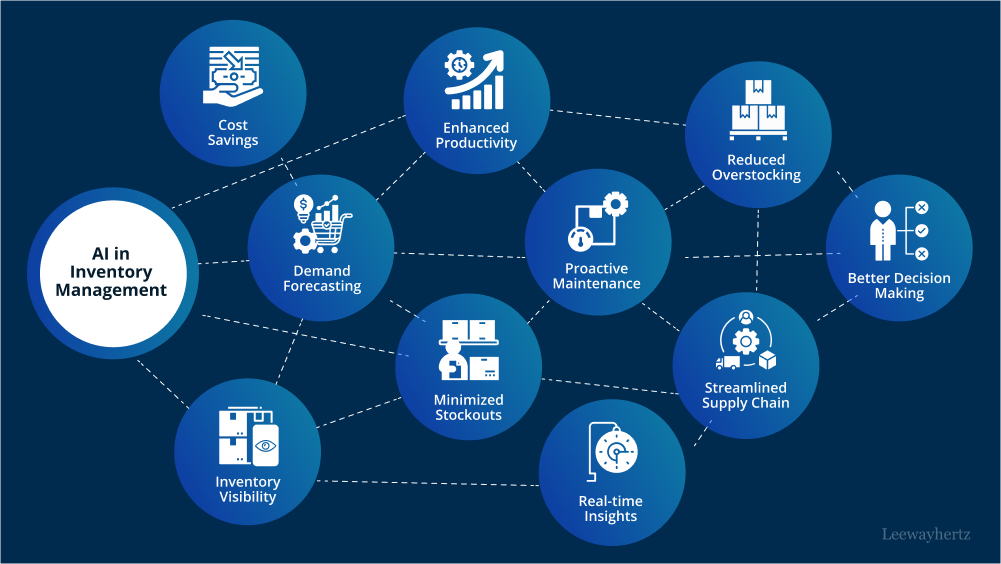
Understanding Inventory Management AI
Inventory Management AI refers to the application of artificial intelligence techniques such as machine learning, predictive analytics, and data mining to optimize inventory processes. By leveraging vast amounts of data, AI-powered systems can forecast demand, optimize stocking levels, and automate inventory replenishment tasks with precision.
Benefits of Inventory Management AI
Enhanced Demand Forecasting:
AI algorithms analyze historical sales data, market trends, and external factors to generate accurate demand forecasts. By predicting future demand more precisely, businesses can optimize their inventory levels, minimize stockouts, and reduce excess inventory costs.Optimized Inventory Levels:
Inventory Management AI dynamically adjusts stocking levels based on real-time sales data and demand forecasts. This proactive approach helps businesses maintain optimal inventory levels, preventing overstocking or stockouts that can lead to revenue loss and increased carrying costs.Improved Supplier Management:
AI-driven inventory systems can optimize supplier relationships by identifying reliable suppliers, negotiating favorable terms, and ensuring timely deliveries. By automating supplier communications and procurement processes, businesses can streamline operations and reduce procurement costs.Minimized Stockouts and Overstocking:
By accurately predicting demand and dynamically adjusting inventory levels, Inventory Management AI minimizes the risk of stockouts and overstocking. This not only improves customer satisfaction by ensuring product availability but also reduces inventory holding costs and markdowns on excess inventory.Increased Efficiency and Cost Savings:
Automation of routine inventory tasks such as replenishment, order management, and inventory tracking frees up valuable time for employees to focus on strategic activities. This increased efficiency not only reduces labor costs but also enhances overall operational productivity.Enhanced Data Visibility and Insights:
AI-powered inventory systems provide businesses with real-time visibility into their inventory levels, sales performance, and supply chain operations. By analyzing this data, businesses can gain valuable insights into customer behavior, market trends, and operational inefficiencies, enabling data-driven decision-making.Scalability and Adaptability:
Inventory Management AI solutions are inherently scalable and adaptable to changing business needs and market dynamics. Whether a business is experiencing rapid growth, seasonal fluctuations, or market disruptions, AI-powered systems can quickly adjust inventory strategies to meet evolving demands.Conclusion
In conclusion, the integration of AI into inventory management represents a significant opportunity for businesses to unlock efficiency, reduce costs, and gain a competitive edge in today’s dynamic marketplace. By harnessing the power of AI algorithms to optimize inventory processes, businesses can enhance demand forecasting, optimize stocking levels, improve supplier management, and drive overall operational efficiency. As technology continues to advance, the role of Inventory Management AI will only become more indispensable in shaping the future of inventory management. Embracing AI-driven solutions today is not just a strategic imperative but a pathway to sustainable growth and success tomorrow.
-
Use Cases of Generative AI in Supply Chain Management
In the fast-paced world of supply chain management, staying ahead of the curve is crucial for success. One technology that is increasingly making waves in this industry is Generative Artificial Intelligence (Generative AI). This innovative technology is revolutionizing the way supply chain processes are managed and optimized, providing businesses with unprecedented opportunities for efficiency and innovation.
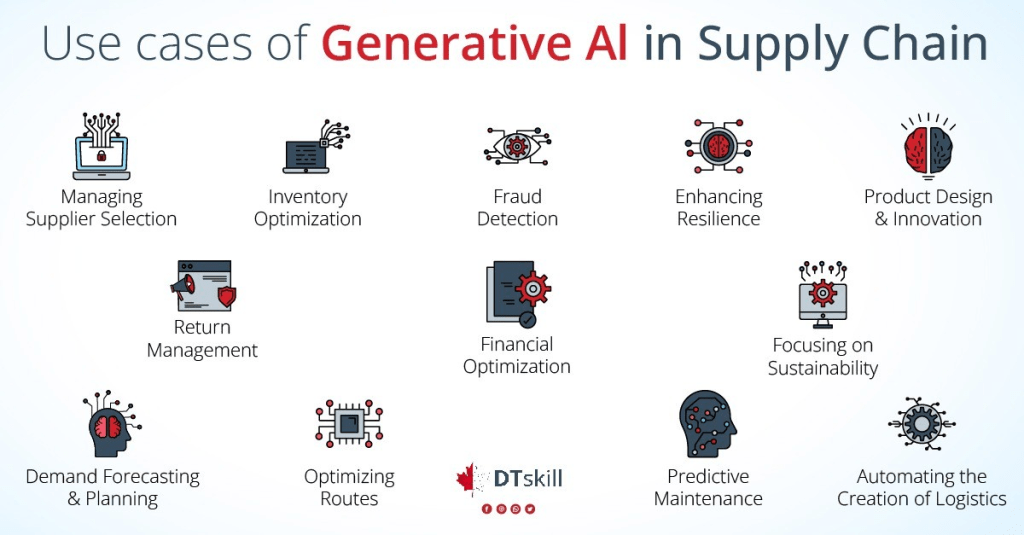
- Demand Forecasting and Predictive Analytics
Generative AI plays a pivotal role in demand forecasting and predictive analytics, allowing organizations to anticipate market trends and customer demands more accurately. By analyzing vast amounts of historical data, Generative AI algorithms can generate models that predict future demand patterns. This capability enables supply chain managers to optimize inventory levels, reduce stockouts, and enhance overall supply chain efficiency.
- Dynamic Route Optimization
Efficient transportation is a cornerstone of effective supply chain management. Generative AI enables dynamic route optimization by considering real-time data such as traffic conditions, weather, and road closures. By continuously adapting routes based on these variables, businesses can minimize transportation costs, reduce delivery times, and enhance customer satisfaction.
- Inventory Management and Stock Optimization
Generative AI contributes significantly to inventory management by identifying patterns and trends that human analysis might overlook. Through predictive modeling, this technology helps optimize stock levels, preventing overstock or stockouts. By minimizing excess inventory and associated carrying costs, businesses can achieve cost savings and improve overall supply chain resilience.
- Supplier Relationship Management
Maintaining strong relationships with suppliers is crucial for a seamless supply chain. Generative AI can analyze supplier performance data, assess risks, and predict potential disruptions. By providing insights into supplier behavior and market dynamics, businesses can make informed decisions to mitigate risks and ensure a stable supply chain.
- Quality Control and Fraud Detection
Ensuring product quality is a priority in supply chain management. Generative AI can be employed in quality control processes by analyzing data from various sources, including sensors and cameras. This technology can identify defects, anomalies, and deviations from quality standards, facilitating timely interventions to maintain high product quality. Additionally, Generative AI can aid in fraud detection by analyzing transactional data and identifying suspicious patterns, safeguarding the integrity of the supply chain.
- Personalized Customer Experiences
Generative AI can enhance customer experiences by personalizing product recommendations and delivery options. By analyzing customer preferences, purchase history, and browsing behavior, businesses can tailor their offerings and delivery services to meet individual needs. This personalization not only increases customer satisfaction but also contributes to higher retention rates and brand loyalty.
- Energy Consumption Optimization
Sustainability is an increasingly important aspect of supply chain management. Generative AI can analyze energy consumption patterns in warehouses, distribution centers, and transportation fleets. By identifying inefficiencies and recommending optimization strategies, businesses can reduce their carbon footprint, comply with environmental regulations, and align with corporate sustainability goals.
Conclusion
Generative AI is transforming the landscape of supply chain management, offering a myriad of benefits from enhanced efficiency to improved innovation. By harnessing the power of predictive analytics, dynamic optimization, and personalized experiences, businesses can stay competitive in today’s dynamic market. As the technology continues to evolve, the integration of Generative AI in supply chain processes is poised to become a standard practice, reshaping the industry and providing businesses with new opportunities for growth and success.
-
Exploring Generative AI Applications: Unlocking the Potential Across Various Use Cases
Generative Artificial Intelligence (Generative AI) has emerged as a transformative technology, pushing the boundaries of what machines can achieve. With its ability to create new content, such as images, texts, and even music, Generative AI is paving the way for numerous innovative applications. In this article, we will delve into the diverse use cases of Generative AI and explore the groundbreaking applications that are reshaping industries.
- Image Synthesis and Enhancement
Generative AI has revolutionized image synthesis, enabling the creation of realistic images from scratch. StyleGAN, a popular generative model, has been used for producing high-quality, lifelike faces and objects. Beyond mere synthesis, Generative AI is also employed for image enhancement, where it can upscale and refine images, making them sharper and more visually appealing.
- Text Generation and Natural Language Processing
In the realm of natural language, Generative AI has made significant strides. Models like GPT-3 can generate coherent and contextually relevant text, making them invaluable for content creation, chatbots, and language translation services. This technology is increasingly being integrated into applications that require dynamic and context-aware language generation.
- Creative Design and Artistic Expression
Generative AI has become a muse for artists and designers. By training models on various artistic styles and patterns, AI systems can generate unique and aesthetically pleasing designs. From creating digital artwork to assisting in the design process for products, Generative AI is fostering a new era of creative expression.
- Drug Discovery and Molecular Design
In the field of pharmaceuticals, Generative AI is proving to be a game-changer. It can analyze vast datasets of chemical compounds and predict potential drug candidates. By generating molecular structures with desired properties, Generative AI accelerates the drug discovery process, potentially leading to the development of novel medications.
- Video Game Development
Generative AI is increasingly finding its place in the world of video game development. It can autonomously generate realistic environments, characters, and even entire game levels. This not only speeds up the game development process but also introduces a level of unpredictability and creativity, enhancing the overall gaming experience.
- Virtual Try-On and Fashion Design
In the retail industry, Generative AI is reshaping the way consumers experience products. Virtual try-on applications leverage Generative AI to simulate how clothing items or accessories would look on an individual, enhancing the online shopping experience. Additionally, AI-driven fashion design tools assist designers in creating unique and innovative apparel designs.
- Medical Imaging and Diagnosis
Generative AI is making significant contributions to the field of medical imaging. By generating synthetic images that mimic various medical conditions, it helps in training and fine-tuning diagnostic algorithms. This not only aids in early detection but also improves the accuracy of medical diagnoses.
- Speech Synthesis and Voice Generation
Advancements in Generative AI have led to the creation of highly realistic synthetic voices. This technology is extensively used in voice assistants, audiobooks, and other applications requiring natural-sounding speech. The ability to generate expressive and contextually relevant voices enhances the user experience in voice-enabled applications.
Conclusion
Generative AI applications are diverse and rapidly expanding, reshaping industries and opening up new possibilities. From generating lifelike images to aiding in drug discovery, the impact of Generative AI is profound. As technology continues to evolve, we can expect even more innovative use cases and applications to emerge, unlocking the full potential of Generative AI across various domains.
-
Exploring the Benefits and Functionality of Polkadot Blockchain Node Launch Services
Polkadot is a unique blockchain technology that enables interoperability between different blockchain networks. It allows for the seamless transfer of data and assets across different blockchains, creating a more connected and efficient ecosystem. However, in order to take advantage of the benefits of Polkadot, users must launch their own nodes on the network. This can be a complex and technical process, which is where Polkadot blockchain node launch services come in.
In this article, we will explore how a Polkadot blockchain node launch service works and the benefits it provides to users.
A Polkadot blockchain node launch service is a service provided by companies or individuals that helps users to launch their own nodes on the Polkadot network. These services take care of the technical details and complexities of setting up and running a node on the network, allowing users to easily connect to the network and start using its features.
How Does a Polkadot Blockchain Node Launch Service Work?
A Polkadot blockchain node launch service works by providing users with a simple and user-friendly interface to launch their own nodes on the Polkadot network. These services take care of the technical details and complexities of setting up and running a node on the network, allowing users to easily connect to the network and start using its features.
Here is a step-by-step process of how a Polkadot blockchain node launch service works:
Step 1: Choose a Polkadot Node Launch Service Provider
The first step is to choose a Polkadot blockchain node launch service provider. There are many providers available, each with its own unique features and pricing. It is important to choose a provider that offers the features you need and has a good reputation in the community.
Step 2: Choose the Type of Node to Launch
Once you have selected a provider, you will need to choose the type of node you want to launch. There are several types of nodes available on the Polkadot network, including validator nodes, full nodes, and light nodes. Each type of node has its own unique features and requirements.
Step 3: Configure Node Settings
After selecting the node type, you will need to configure the settings for your node. This includes choosing the network you want to connect to, selecting the number of validators, and setting up the node’s security settings.
Step 4: Launch the Node
Once you have configured the settings, you can launch the node. The Polkadot blockchain node launch service will take care of the technical details and complexities of setting up and running the node on the network. Once the node is launched, you can start using the features of the Polkadot network.
Benefits of a Polkadot Blockchain Node Launch Service
Using a Polkadot blockchain node launch service provides many benefits to users, including:
- Ease of Use: Launching a node on the Polkadot network can be a complex and technical process. Using a Polkadot blockchain node launch service simplifies this process and makes it accessible to users without extensive technical knowledge.
- Technical Support: Polkadot blockchain node launch service providers offer technical support to users, ensuring that any issues or problems are quickly resolved.
- Customization: Polkadot blockchain node launch services offer users the ability to customize their nodes to suit their specific needs.
- Cost-effective: Launching a node on the Polkadot network can be expensive. Using a Polkadot blockchain node launch service can be a cost-effective alternative.
- Security: Polkadot blockchain node launch service providers offer advanced security features to protect the node and the user’s data.
Conclusion
A Polkadot blockchain node launch service simplifies the process of launching a node on the Polkadot network. It allows users to take advantage of the Polkadot, such as interoperability between different blockchains, without having to worry about the technical details and complexities of running a node. By using a Polkadot blockchain node launch service, users can focus on using the features of the network and building applications, rather than spending time and resources on setting up and maintaining their own nodes.
-
Exploring The Benefits of Metaverse Application Development
The concept of the metaverse has been around for decades, but it’s only in recent years that it’s started to gain real traction. With the advent of virtual reality technology and the growth of online communities, the idea of a fully-realized metaverse is closer than ever before. As a result, more and more companies are starting to invest in metaverse development, and for good reason. In this article, we’ll take a look at some of the potential benefits of metaverse application development, and how they could impact the future of technology.
One of the main benefits of metaverse application development is the potential for increased social interaction. In the current digital landscape, social media platforms and messaging apps have become the primary way that people communicate with each other. However, these platforms can often feel impersonal, and it can be difficult to form meaningful connections with others. In the metaverse, users will be able to interact with each other in a much more immersive and engaging way. They’ll be able to explore virtual environments together, participate in shared experiences, and build relationships that are deeper and more meaningful than what’s possible on traditional social media platforms.
Another potential benefit of metaverse development is the ability to create new business opportunities. In the current digital economy, companies are limited by the physical constraints of the real world. They can only sell products and services in specific geographic locations, and they’re limited by the availability of physical resources. In the metaverse, however, these limitations disappear. Companies can create virtual storefronts and sell products to users from all around the world. They can also leverage the power of virtual economies to create new revenue streams, such as selling virtual goods and services.
Metaverse application development also has the potential to revolutionize the way we learn and educate. Traditional classroom learning can often feel dry and unengaging, and it can be difficult for students to stay motivated and focused. In the metaverse, however, learning can be transformed into a much more interactive and immersive experience. Students can explore virtual environments, participate in interactive simulations, and collaborate with other students from all around the world. This has the potential to create a much more engaging and effective learning experience, and to help students develop the skills they need to succeed in the 21st century.
Finally, metaverse development has the potential to create new opportunities for entertainment and cultural experiences. In the current digital landscape, most entertainment experiences are consumed passively, such as watching movies or listening to music. In the metaverse, however, entertainment can be transformed into a much more active and engaging experience. Users can participate in shared experiences, such as attending virtual concerts or exploring virtual museums. They can also create their own content and share it with others, creating a vibrant and dynamic cultural landscape.
Overall, the potential benefits of metaverse application development are vast and far-reaching. From increased social interaction to new business opportunities, the metaverse has the potential to transform the way we interact with each other and with technology. As a result, more and more companies are starting to invest in metaverse development, and we can expect to see some exciting developments in the years to come. If you’re looking to get involved in metaverse development, it’s important to work with a reputable metaverse development company that has experience in this field. With the right expertise and resources, you can help shape the future of technology and create a more engaging and immersive digital landscape for all.
-
Subscribe
Subscribed
Already have a WordPress.com account? Log in now.
 Digital Insight Marketing