Traditional maintenance models—reactive repairs and calendar‑based inspections—are increasingly inadequate for complex, high‑value equipment. Unplanned downtime not only erodes productivity but also escalates safety risks and warranty costs. Artificial intelligence introduces a data‑centric layer that transforms raw sensor streams into actionable insights, enabling organizations to anticipate failures before they manifest. By shifting from “fix‑when‑broken” to “fix‑when‑likely,” enterprises achieve higher asset availability and a measurable reduction in total cost of ownership.
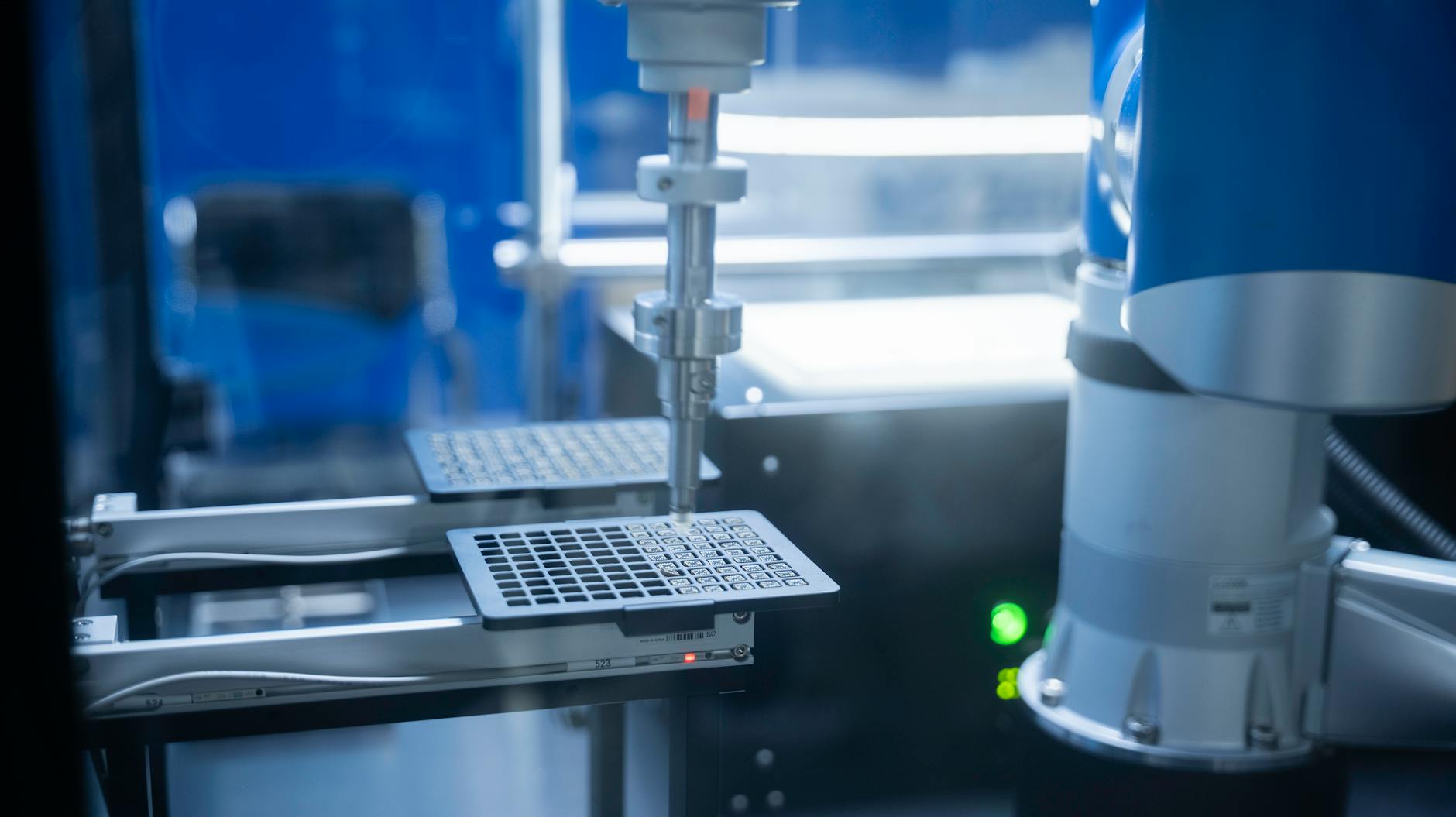
AI’s value proposition lies in its ability to ingest disparate data types—vibration signatures, temperature trends, operational logs, and even external variables such as weather or supply chain delays—and fuse them into a unified health model. This holistic view uncovers hidden correlations that human analysts often overlook. Moreover, machine‑learning algorithms continuously refine their predictions as new data arrives, ensuring that the maintenance strategy adapts to evolving operating conditions.
In sectors ranging from manufacturing to energy generation, the strategic imperative is clear: adopt AI‑enhanced predictive maintenance to protect capital assets, extend component lifespans, and sustain competitive advantage. The following sections detail the technologies, real‑world use cases, and implementation pathways necessary to realize these benefits.
Core AI Technologies Powering Predictive Maintenance
At the heart of AI‑driven maintenance are three technology pillars: advanced analytics, machine‑learning models, and edge computing. Advanced analytics aggregates high‑frequency sensor data, applying statistical techniques to identify outliers and trend deviations. Machine‑learning models—such as supervised classification for fault detection or unsupervised clustering for anomaly discovery—translate these statistical patterns into failure probabilities. Edge computing brings processing power close to the equipment, reducing latency and bandwidth demands while preserving data privacy.
Deep learning, particularly convolutional neural networks (CNNs), excels at interpreting complex waveform data such as acoustic emissions or motor currents. By training CNNs on labeled failure datasets, organizations can achieve near‑real‑time detection of subtle degradation signatures that would escape conventional threshold‑based alarms. Reinforcement learning, meanwhile, can optimize maintenance scheduling by balancing the cost of intervention against the risk of failure, dynamically adjusting work orders as conditions evolve.
Integration platforms that support standardized protocols (e.g., OPC UA, MQTT) ensure seamless data flow from legacy PLCs to modern AI services. Coupled with scalable cloud infrastructures, these platforms enable organizations to expand predictive capabilities across multiple sites without prohibitive capital outlays.
High‑Impact Use Cases Across Industries
Manufacturing plants leverage AI to monitor spindle health in CNC machines, detecting micro‑vibrations that precede bearing wear. By replacing a scheduled bearing swap every 12 months with condition‑based replacement after 8 months on average, firms cut inventory costs by 30 % while avoiding unscheduled line stoppages. In the oil and gas sector, AI analyzes pressure and flow sensor data from pipelines to predict corrosion hotspots, allowing targeted pigging operations that extend pipeline life by up to 15 years.
Utility companies apply predictive analytics to transformer temperature and load profiles, forecasting insulation degradation and scheduling hot‑line inspections only when risk exceeds a defined threshold. This approach reduces field crew dispatches by 40 % and improves outage response times. In the transportation arena, AI models evaluate brake pad wear on freight locomotives using vibration and acoustic data, prompting maintenance before regulatory wear limits are reached, thereby enhancing safety compliance.
Across these scenarios, the common denominator is a shift from static, time‑based interventions to dynamic, risk‑adjusted actions driven by AI insight. The result is not merely cost savings but also heightened reliability, regulatory adherence, and operational agility.
Quantifiable Benefits and Return on Investment
Organizations that fully operationalize AI‑enabled predictive maintenance report a 20‑40 % reduction in unplanned downtime, translating to millions in avoided revenue loss for large‑scale operations. Component failure rates decline by 25‑35 % as early‑stage anomalies are addressed before they propagate. Furthermore, maintenance labor efficiency improves because work orders are generated only when data indicates genuine risk, reducing unnecessary inspections by up to 50 %.
From a financial perspective, the payback period for AI maintenance solutions typically ranges from 12 to 24 months, driven by lower spare‑part inventories, reduced overtime, and extended asset lifespans. Environmental benefits also accrue: fewer emergency repairs mean less waste and lower carbon emissions associated with logistics and material consumption.
Beyond the hard metrics, AI fosters a culture of data‑driven decision making. Maintenance teams transition from reactive technicians to analytical partners, collaborating with data scientists to refine models and continuously improve asset performance.
Implementation Blueprint: From Pilot to Enterprise‑Wide Rollout
A disciplined implementation path begins with a focused pilot on a high‑value asset class that already possesses adequate sensor coverage. Define clear objectives—such as reducing mean time between failures (MTBF) by a specific percentage—and collect baseline performance data for comparison. Deploy edge nodes to preprocess sensor streams, then feed aggregated features into a cloud‑based machine‑learning pipeline for model training and validation.
Critical success factors include data quality governance, cross‑functional stakeholder alignment, and robust change management. Establish data‑ownership policies to ensure sensor calibration and timestamp accuracy, and create a joint steering committee comprising operations, IT, and analytics leaders. Conduct regular model performance reviews, using metrics like precision, recall, and area under the ROC curve to gauge predictive effectiveness.
After a successful pilot, scale the solution by replicating the data ingestion architecture across additional equipment groups, leveraging containerized services for rapid deployment. Integrate the AI engine with the existing enterprise asset management (EAM) system to automate work‑order creation, priority assignment, and resource allocation. Finally, institutionalize continuous improvement loops: feed post‑maintenance outcomes back into the model repository to enhance future predictions.
Future Outlook: Expanding AI Horizons in Asset Care
As sensor technology advances—embracing fiber‑optic strain gauges, hyperspectral imaging, and low‑power IoT modules—the data richness available for AI analysis will deepen. Coupled with emerging federated learning techniques, organizations will be able to train robust models across geographically dispersed sites without exposing proprietary data, preserving confidentiality while benefiting from collective intelligence.
Digital twins, virtual replicas of physical assets, will increasingly serve as simulation environments where AI can test maintenance scenarios before execution. This synergy enables “what‑if” analyses that optimize spare‑part logistics, crew scheduling, and even redesign of equipment for improved maintainability.
In summary, integrating AI into predictive maintenance is no longer a futuristic concept but an operational imperative. By mastering the technologies, applying proven use cases, quantifying benefits, and following a structured implementation roadmap, enterprises can unlock sustained reliability, cost efficiency, and strategic resilience for their most critical assets.
Read more at LeewayHertz
 Digital Insight Marketing
Leave a comment