Generative AI (Gen AI) has the potential to revolutionize the manufacturing industry by enhancing product design, optimizing production processes, and reducing operational costs. However, developing a Gen AI platform tailored to the specific needs of manufacturing is a complex task fraught with challenges. These challenges range from data management and integration to ensuring scalability and compliance. This article explores the key challenges faced when developing a Gen AI platform for manufacturing and provides practical solutions to overcome them.
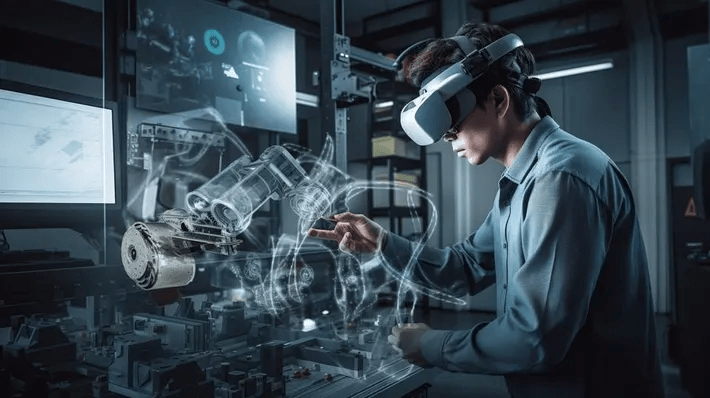
Introduction: The Promise of Generative AI in Manufacturing
The manufacturing industry is under constant pressure to innovate, reduce costs, and improve efficiency. Generative AI, which leverages advanced machine learning techniques to generate new content, designs, and solutions, offers a way to meet these demands. By automating and optimizing various aspects of manufacturing, Gen AI can lead to significant improvements in productivity, quality, and customization. However, realizing these benefits requires addressing several challenges that arise during the development of a Gen AI platform.
The Role of Generative AI in Manufacturing
Generative AI platform for manufacturing can be applied to various aspects of manufacturing, including:
- Product Design: AI-driven design tools can create innovative and optimized designs based on specific parameters.
- Process Optimization: Gen AI can analyze production processes to identify inefficiencies and suggest improvements.
- Predictive Maintenance: AI models can predict equipment failures before they occur, minimizing downtime and maintenance costs.
Challenge 1: Data Management and Integration
1.1 Data Availability and Quality
Challenge: Manufacturing processes generate vast amounts of data from various sources, including sensors, machines, and enterprise systems. However, this data is often unstructured, incomplete, or inconsistent, making it difficult to use effectively in AI models.
Solution:
- Data Cleaning and Preprocessing: Implement robust data cleaning and preprocessing techniques to handle missing, noisy, and inconsistent data. This includes standardizing data formats, filling in missing values, and removing outliers.
- Data Integration: Use data integration tools to combine data from different sources into a unified format. This enables the AI platform to access and analyze comprehensive datasets.
1.2 Data Labeling
Challenge: For supervised learning models, labeled data is essential. However, labeling manufacturing data, such as identifying defects or classifying production outcomes, can be time-consuming and expensive.
Solution:
- Automated Labeling Tools: Leverage automated labeling tools and techniques, such as active learning and semi-supervised learning, to reduce the manual effort required for data labeling.
- Crowdsourcing: Consider crowdsourcing data labeling tasks to distribute the workload and reduce costs.
Challenge 2: Model Development and Training
2.1 Model Selection
Challenge: Choosing the right AI model for specific manufacturing tasks can be challenging due to the complexity and variability of manufacturing processes.
Solution:
- Custom Model Development: Develop custom AI models tailored to the specific needs and constraints of the manufacturing process. This may involve using a combination of deep learning, reinforcement learning, and generative models.
- Experimentation and Prototyping: Use rapid prototyping and experimentation to test different models and select the one that performs best for the given task.
2.2 Training Data Requirements
Challenge: AI models require large amounts of high-quality data for training. In manufacturing, collecting and curating this data can be difficult, especially for rare events such as equipment failures.
Solution:
- Synthetic Data Generation: Use generative models to create synthetic data that can supplement real-world data, especially for rare events. This approach helps in training models when actual data is scarce.
- Data Augmentation: Implement data augmentation techniques to artificially increase the size and diversity of the training dataset, improving the model’s generalization capabilities.
Challenge 3: Scalability and Integration
3.1 Scalability of AI Models
Challenge: Manufacturing environments are dynamic, with fluctuating workloads and varying production scales. Ensuring that AI models can scale to handle these variations is a significant challenge.
Solution:
- Distributed Computing: Utilize distributed computing frameworks, such as Apache Spark or TensorFlow Distributed, to scale AI models across multiple machines. This allows the platform to handle large-scale data and computational tasks.
- Edge Computing: Implement edge computing solutions to process data locally at the source, reducing latency and ensuring real-time decision-making even in large-scale operations.
3.2 Integration with Existing Systems
Challenge: Manufacturing facilities often rely on legacy systems and equipment, making it difficult to integrate new AI technologies seamlessly.
Solution:
- API-Based Integration: Develop APIs that allow the AI platform to interface with existing manufacturing systems, such as ERP (Enterprise Resource Planning) and MES (Manufacturing Execution Systems). This ensures smooth communication and data exchange between the AI platform and legacy systems.
- Modular Architecture: Design the AI platform with a modular architecture that allows for easy integration of new components and technologies without disrupting existing operations.
Challenge 4: Real-Time Processing and Decision-Making
4.1 Real-Time Data Ingestion
Challenge: Manufacturing processes require real-time data ingestion and processing to enable immediate decision-making. Delays in data processing can lead to suboptimal outcomes, such as production bottlenecks or equipment failures.
Solution:
- Stream Processing Frameworks: Implement stream processing frameworks like Apache Kafka or Apache Flink to enable real-time data ingestion and processing. These frameworks can handle high-throughput data streams and provide low-latency processing.
- Event-Driven Architecture: Use event-driven architecture to trigger AI-driven decisions and actions based on real-time data events, such as sensor readings or production milestones.
4.2 Real-Time Analytics and Feedback
Challenge: Providing real-time analytics and feedback to operators and decision-makers is critical for optimizing manufacturing processes. However, this requires processing large volumes of data quickly and accurately.
Solution:
- In-Memory Computing: Implement in-memory computing technologies, such as Apache Ignite or Redis, to accelerate data processing and analytics. This approach allows for real-time insights and faster decision-making.
- Dashboards and Visualization Tools: Develop interactive dashboards and visualization tools that provide operators with real-time insights and feedback. These tools should be intuitive and customizable to meet the specific needs of the manufacturing process.
Challenge 5: Security and Compliance
5.1 Data Security
Challenge: Manufacturing data is often sensitive, containing proprietary information, trade secrets, and critical operational data. Ensuring the security of this data is a top priority.
Solution:
- Encryption: Implement robust encryption protocols for data at rest and in transit to protect against unauthorized access and data breaches.
- Access Control: Use role-based access control (RBAC) to ensure that only authorized personnel have access to specific data and AI systems. This reduces the risk of data leakage and unauthorized actions.
5.2 Regulatory Compliance
Challenge: Manufacturing companies must comply with various industry regulations and standards, such as ISO certifications and data protection laws. Ensuring that the AI platform meets these compliance requirements can be challenging.
Solution:
- Compliance Management Tools: Integrate compliance management tools into the AI platform to monitor and enforce regulatory requirements. These tools can automate compliance checks and generate audit reports.
- Continuous Monitoring: Implement continuous monitoring of the AI platform to detect and address compliance issues in real-time. This proactive approach helps in maintaining compliance and avoiding potential legal or financial penalties.
Challenge 6: Ethical AI and Bias Mitigation
6.1 Ensuring Fairness and Transparency
Challenge: AI models in manufacturing must make fair and unbiased decisions. However, biases can be introduced during data collection, model training, or decision-making processes.
Solution:
- Bias Detection Tools: Use bias detection tools to identify and mitigate biases in AI models. These tools can analyze model outputs and highlight any discrepancies or unfair outcomes.
- Transparent AI Models: Develop AI models that are transparent and explainable. This allows operators and decision-makers to understand how the model arrived at a particular decision and ensures accountability.
6.2 Ethical Considerations
Challenge: The deployment of AI in manufacturing raises ethical considerations, such as the impact on jobs, worker safety, and the environment.
Solution:
- Ethical AI Frameworks: Adopt ethical AI frameworks that guide the development and deployment of AI in manufacturing. These frameworks should prioritize human well-being, environmental sustainability, and social responsibility.
- Stakeholder Engagement: Involve stakeholders, including workers, customers, and regulators, in the development and deployment of AI solutions. This ensures that the AI platform aligns with ethical standards and addresses the concerns of all parties involved.
Conclusion: Overcoming Challenges to Unlock the Potential of Generative AI in Manufacturing
Developing a Generative AI platform for manufacturing is a complex endeavor that involves navigating a myriad of challenges, from data management and model development to scalability and ethical considerations. However, with the right strategies and solutions in place, these challenges can be overcome, paving the way for a successful AI-driven transformation of the manufacturing industry.
By addressing these challenges head-on, manufacturers can unlock the full potential of Generative AI, leading to enhanced productivity, innovation, and competitiveness. The future of manufacturing lies in the integration of AI technologies, and those who invest in overcoming these challenges today will be the leaders of tomorrow.
As the manufacturing industry continues to evolve, the role of Generative AI will only grow in importance. By developing robust, scalable, and ethical AI platforms, manufacturers can stay ahead of the curve and drive the next wave of industrial innovation.
 Digital Insight Marketing
Leave a comment