In today’s fast-paced business landscape, the efficient management of inventory stands as a cornerstone for success. As industries evolve and customer demands shift, businesses are increasingly turning to innovative solutions to streamline their inventory processes. One such solution gaining traction is the integration of Artificial Intelligence (AI) into inventory management systems. In this article, we explore the profound impact of Inventory Management AI and the manifold benefits it brings to businesses.
Understanding Inventory Management AI
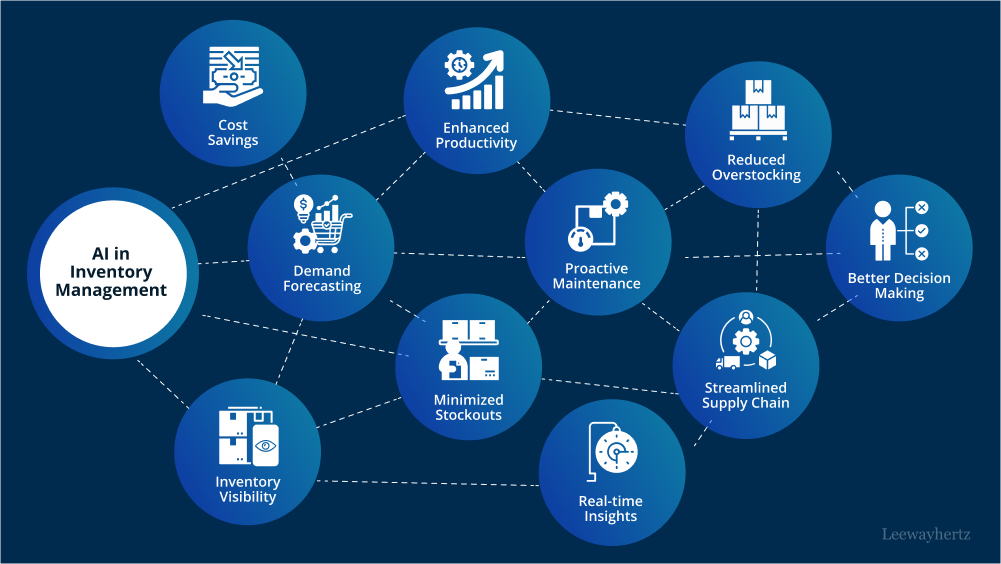
Inventory Management AI refers to the application of artificial intelligence techniques such as machine learning, predictive analytics, and data mining to optimize inventory processes. By leveraging vast amounts of data, AI-powered systems can forecast demand, optimize stocking levels, and automate inventory replenishment tasks with precision.
Benefits of Inventory Management AI
Enhanced Demand Forecasting:
AI algorithms analyze historical sales data, market trends, and external factors to generate accurate demand forecasts. By predicting future demand more precisely, businesses can optimize their inventory levels, minimize stockouts, and reduce excess inventory costs.
Optimized Inventory Levels:
Inventory Management AI dynamically adjusts stocking levels based on real-time sales data and demand forecasts. This proactive approach helps businesses maintain optimal inventory levels, preventing overstocking or stockouts that can lead to revenue loss and increased carrying costs.
Improved Supplier Management:
AI-driven inventory systems can optimize supplier relationships by identifying reliable suppliers, negotiating favorable terms, and ensuring timely deliveries. By automating supplier communications and procurement processes, businesses can streamline operations and reduce procurement costs.
Minimized Stockouts and Overstocking:
By accurately predicting demand and dynamically adjusting inventory levels, Inventory Management AI minimizes the risk of stockouts and overstocking. This not only improves customer satisfaction by ensuring product availability but also reduces inventory holding costs and markdowns on excess inventory.
Increased Efficiency and Cost Savings:
Automation of routine inventory tasks such as replenishment, order management, and inventory tracking frees up valuable time for employees to focus on strategic activities. This increased efficiency not only reduces labor costs but also enhances overall operational productivity.
Enhanced Data Visibility and Insights:
AI-powered inventory systems provide businesses with real-time visibility into their inventory levels, sales performance, and supply chain operations. By analyzing this data, businesses can gain valuable insights into customer behavior, market trends, and operational inefficiencies, enabling data-driven decision-making.
Scalability and Adaptability:
Inventory Management AI solutions are inherently scalable and adaptable to changing business needs and market dynamics. Whether a business is experiencing rapid growth, seasonal fluctuations, or market disruptions, AI-powered systems can quickly adjust inventory strategies to meet evolving demands.
Conclusion
In conclusion, the integration of AI into inventory management represents a significant opportunity for businesses to unlock efficiency, reduce costs, and gain a competitive edge in today’s dynamic marketplace. By harnessing the power of AI algorithms to optimize inventory processes, businesses can enhance demand forecasting, optimize stocking levels, improve supplier management, and drive overall operational efficiency. As technology continues to advance, the role of Inventory Management AI will only become more indispensable in shaping the future of inventory management. Embracing AI-driven solutions today is not just a strategic imperative but a pathway to sustainable growth and success tomorrow.
 Digital Insight Marketing
Leave a comment